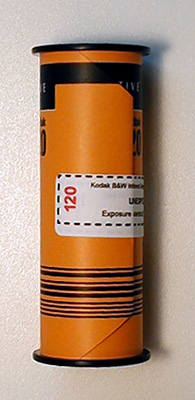
Kodak B&W Infrared
Aerographic Film 2424

Cut down from 70mm and respooled into 120 Rolls
Description:
Kodak B&W Infrared Aerographic Film 2424 is manufactured and sold by Kodak as a 70mm double perforated film and is designed for aerial photography cameras. This film has been machine cut and re-rolled to allow it to be used in standard medium format cameras using 120/220 rolls. The emulsion is identical to Kodak HIE and has all of the same handling, exposure and processing characteristics.
For a full description of Kodak HIE go to: http://kodak.com/global/en/professional/support/techPubs/f13/f13.pdf
For a full description of Kodak Aerial 2424 go to: http://kodak.com/US/en/government/aerial/technicalPubs/tiDocs/ti0132/ti0132.pdf
Important physical characteristics:
This film has been cut down from its original 70mm format to the 120/220 format. It is on Kodak’s 3.9 mil Estar base. The width of the film is 61.5mm. THE FILM HAS BEEN CUT DOWN BOTH EDGES IN ORDER TO MINIMIZE THE INTRUSION OF THE SPROCKET HOLES INTO THE IMAGE AREA. In its original format, there is 2.0 mm between the edge of the film and the perforations (sprocket holes). Approximately 1.5 mm has been removed from one edge and 7.0 mm from the other edge. Although this does leave sprocket holes running along one edge, in almost every case they will not appear in the printed image. You may notice that the sprocket holes barely intrude into the image area of the negative, but normal negative carriers and cropping cards will crop the image slightly and remove these. Care has been taken to minimize the chances, but considering manufacturing tolerances as well as variations in camera backs, no guarantee is made that sprocket holes will not show in the final print.

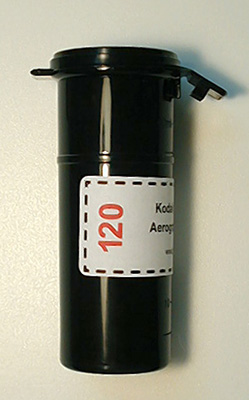
This film has been tightly rolled by machine, not by hand, in order to eliminate defects and provide the most light-tight package. The backing paper and plastic spools are recycled from a high volume color photo lab. The film may be loaded and unloaded in subdued light. Since a darkroom or changing bag is not required, you may treat this film almost like any other. Whenever possible, the film should be handled under minimal lighting and stored in a light-tight container or bag after exposure. The best container is the 120 film canister included with the film.